

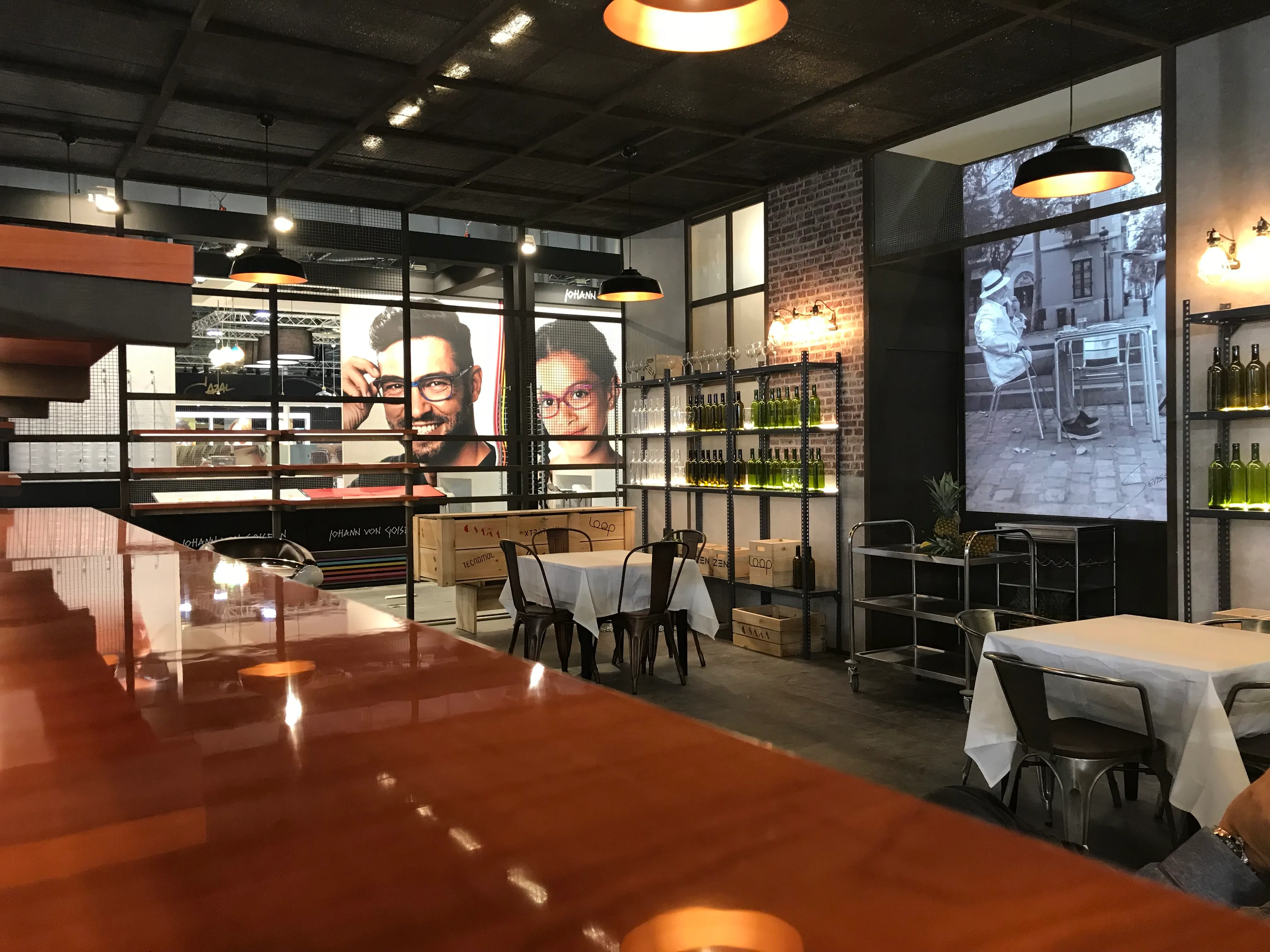
Exhibiting at a trade fair is a significant investment: space rental, stand construction, logistics, staff and travel can add up to tens of thousands of euros. The return on that investment depends, largely, on the quality and impact of your stand. This guide explains how to maximise it.
1. Define your objectives before talking about design
The most common mistake is starting with aesthetics. Before discussing colours, materials or lighting, you need to answer these questions: What do you want to achieve at this fair? Generate leads, close sales, launch a product, strengthen brand image? Who do you want to attract?
The answers will shape absolutely everything: the type of stand, the spatial layout, interactive elements, signage and the staff you'll need. A stand for a B2B industrial machinery fair has completely different objectives and solutions to one for a consumer fashion show.
2. Stand types: custom, modular or rental
There are three main stand families:
- Custom stand: designed and produced specifically for your brand. Maximum personalisation and impact. Worth the investment if you exhibit at multiple fairs per year.
- Modular stand: built with standardised but customisable profile and panel systems. A balance of flexibility, cost and quality. Highly recommended for companies with regular exhibition presence.
- Rental stand: the lowest initial investment option. Ideal for testing a new market or one-off participations. Less visual differentiation.
3. The brief: the foundation of good design
A good brief is the most important document in the process. It should include: participation objectives, the size and layout of your assigned space, the number of sales team members, products or services to display, available budget, fair timelines and any venue regulations.
4. The design process: from concept to 3D render
Professional trade fair stand design goes through several phases. First, the design team develops one or more concepts responding to the brief. Each concept is presented as photorealistic 3D renders that allow you to visualise the final result with precision.
Once the concept is approved, the technical project is developed with all construction, electrical and finishing details. This document is what is submitted to the exhibition venue for permit approval.
5. Materials and sustainability in 2026
Sustainability has gone from optional to mandatory at many international fairs. The most widely used materials today include:
- FSC-certified wood: natural, warm aesthetic with guaranteed sustainable sourcing.
- Extruded aluminium systems: lightweight, durable, reusable and 100% recyclable.
- Recycled fibre textiles: for graphic panels, partitions and decorative elements.
- Water-based inks: for signage and graphic printing.
6. Lighting: the most underused tool
A well-lit stand can be seen from across the hall. Yet lighting remains the element that receives the least attention in most exhibitors' briefs. In 2026, programmable LED systems allow you to change colour temperature, intensity and spotlight focus throughout the day or based on which product you want to highlight.
7. Exhibition regulations: what you cannot ignore
Every exhibition venue has its own construction regulations. The most common restrictions are: maximum build height, setbacks from aisles and neighbouring stands, prohibited materials, maximum floor loads and required technical services. Non-compliance can mean last-minute stand modifications — a costly and stressful scenario. An experienced stand builder familiar with your specific venue is the best guarantee of compliance.
8. Timelines: how much time do you need?
- Large custom stand (>50 m²): minimum 8–12 weeks
- Personalised modular stand: minimum 4–6 weeks
- Standard rental stand: can be managed in 2–3 weeks
Add permit processing times with the venue: typically 2–4 weeks depending on the fair. Starting late is the most expensive mistake in the process.
9. Assembly and dismantling: the on-site reality
On-site assembly is the most demanding phase. Exhibition venues assign strict time windows for setup and teardown. Working with a team that knows venue procedures, holds valid credentials and knows how to handle the unexpected is critical to a stress-free participation.
10. Measuring your ROI
No investment without measurement. Before the fair, define your KPIs: number of qualified contacts, meetings arranged, sales opportunities opened, estimated pipeline value generated. After the fair, compare results with total participation costs to calculate your ROI.
Have a trade fair coming up?
Tell us about your project and we will prepare a personalised proposal at no cost.
Request a quote