

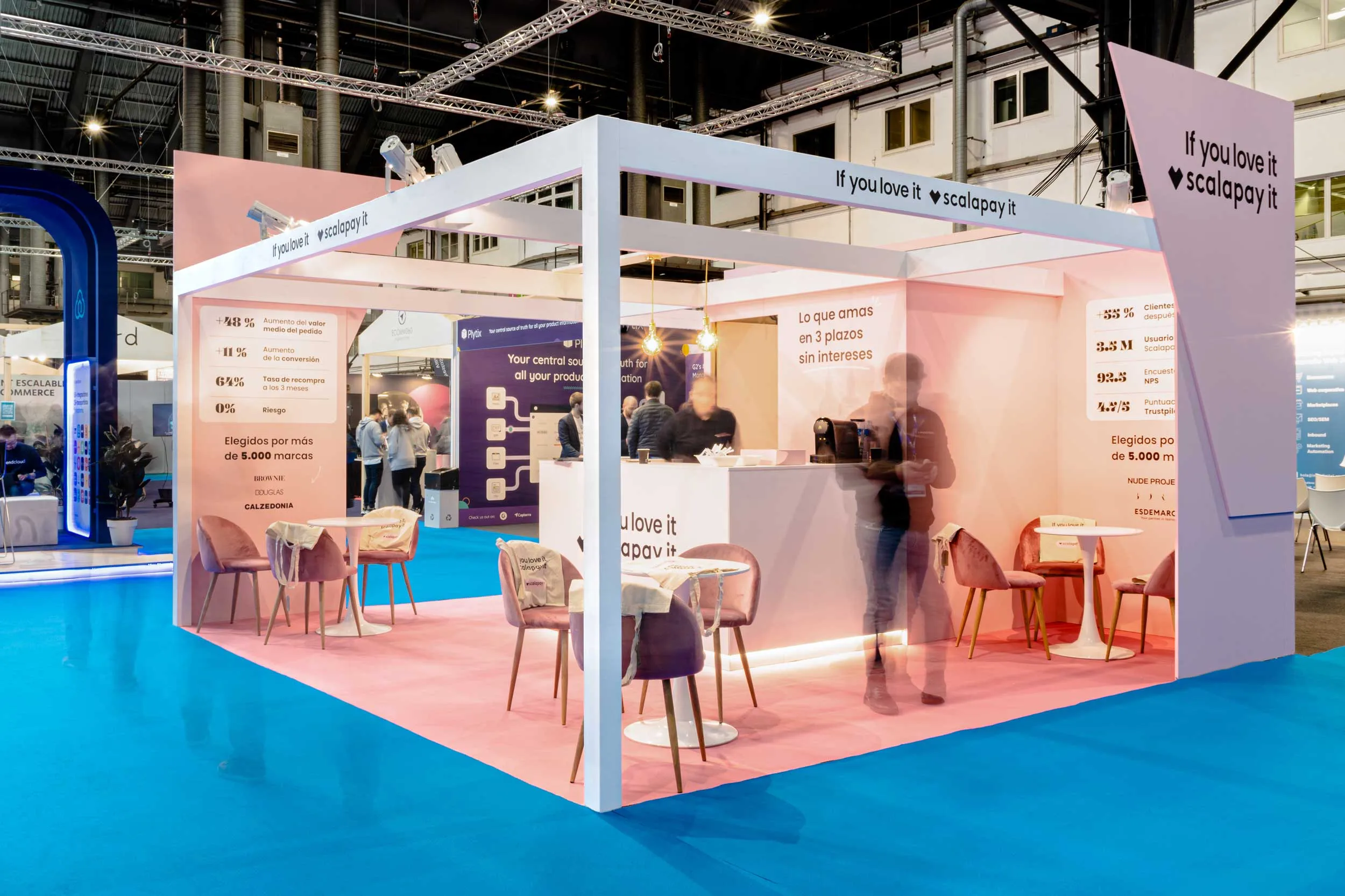
The modular stand is one of the smartest solutions for companies with regular exhibition presence. It allows you to reuse the same structure at different fairs, adapt the space to different sizes, and significantly reduce the cost per event. But it's not for everyone. Here's when it makes sense — and when it doesn't.
What is a modular stand?
A modular stand is built with a system of structural profiles (usually extruded aluminium) and interchangeable panels. The structure can be assembled and disassembled without specialist tools and reconfigured into different geometries to suit the available space.
What sets it apart from a custom stand is that it starts from a standardised system that is personalised with brand-specific finishes, graphics and lighting. The result can look completely unique, but the underlying structure is reusable.
Advantages of a modular stand
- Reusability: the same structure can be used at 10, 20 or 30 fairs with proper maintenance.
- Adaptability: can be reconfigured for different sized spaces (e.g. 20 m² at one fair, 40 m² at another).
- Decreasing cost per use: the more fairs, the lower the amortised cost per event.
- Sustainability: less waste, less production of new materials.
- Faster assembly: modular systems are quicker to assemble than custom stands.
When to choose a modular stand
The modular stand makes most sense when you exhibit at more than two fairs per year with the same brand, your booth sizes vary between events, you seek a balance between quality image and reasonable cost, or you have a sustainability policy that values waste reduction.
Interested in a modular stand?
We will advise you, with no commitment, on which solution best fits your exhibition programme.
Request advice